
High-performing teams: when the leader stops being the bottleneck
Updated: 2 days ago
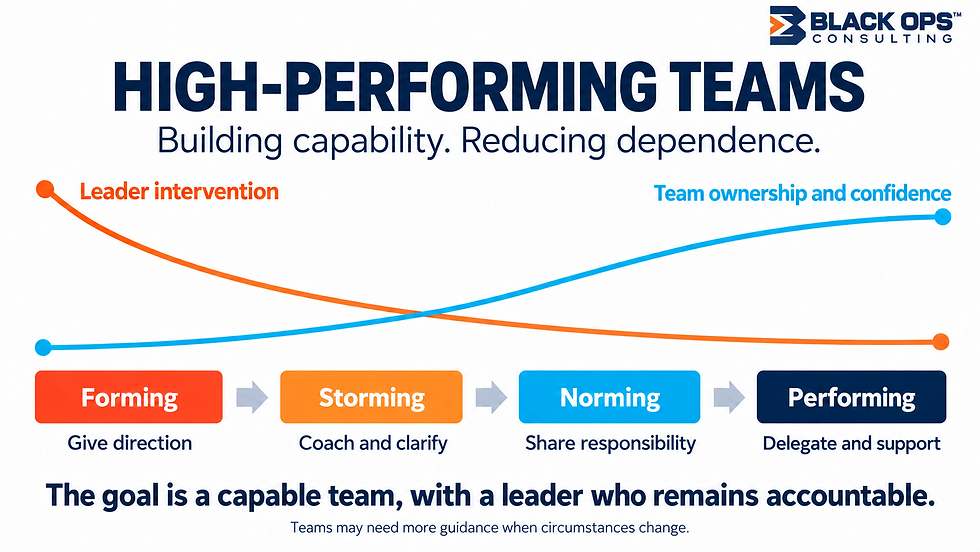
During a discussion about team development at an away day, I sketched a diagram to capture how leadership changes as a team becomes more capable and confident.
Looking at it again, the question behind it still feels relevant: how do we help a team reach the point where it can perform well without waiting for the leader to make every decision?
For me, one of the most demanding transitions in leadership is learning to let go of work and decisions that other people are ready to own.
Being the person with the answers can feel rewarding. You solve problems, keep things moving and become the person everyone turns to. But there is a cost when every question comes back to you. Decisions queue up, people hesitate and the team’s capacity becomes limited by your availability.
A full diary and a constant stream of requests can feel like evidence of your importance. They can also be a sign that the team has become too dependent on you.
I have sometimes described the leader’s ambition as making themselves redundant. By that, I mean removing the team’s dependence on their constant intervention. The leader still has a job to do, including setting direction, developing capability and remaining accountable for the environment in which the team works.
The aim is to build a team that can think, decide and act with confidence.
That takes more than telling people they are empowered. They need a clear understanding of the outcome, the standards expected and the decisions they can make. They also need to know when to ask for help and what must be escalated.
In manufacturing, those boundaries matter. Giving someone greater ownership of an improvement project is different from allowing them to bypass a safety requirement or change a critical process without approval. Good delegation makes those distinctions clear.
My original diagram shows a progression from a challenging team towards a high-performing one, with the amount of direction reducing along the way. It is a useful prompt for discussion, although real teams rarely follow such a tidy path. A change in people, a new product or a serious problem can create a fresh need for guidance.
The leader’s judgement lies in recognising what the team needs now.
At one point, that may mean giving clear instructions and establishing reliable ways of working. Later, it may mean asking questions, coaching someone through a decision or creating space for the team to resolve a disagreement itself.
Stepping back too quickly can leave people exposed. Holding on too long can prevent them from growing. Neither helps the team develop confidence.
There is another point in the diagram I would express differently today. A capable team may make the leader’s working day feel calmer, but high performance should still offer challenge and interest. As routine problems need less intervention, the leader has more time to look ahead, develop people and tackle the issues that will shape the business’s future.
The team also needs continuing support. Trust grows when people know they can raise a concern, admit uncertainty and ask for help without losing the responsibility they have earned.
A useful test is what happens when the leader is away. Can the team maintain standards, make sound decisions and recognise when something needs escalating? If it can, that is something to take pride in.
Perhaps the most satisfying recognition a leader can receive is hearing someone say, “You helped me believe I could do this.”
That is a contribution which lasts beyond any single decision or result. You have helped other people become more capable, and the business benefits from their confidence and judgement.
How much of your team’s performance depends on you being there, and what could you do to help them need less of your intervention?


Comments